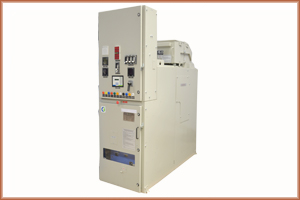
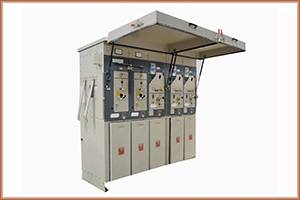
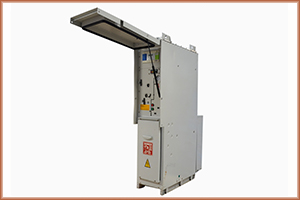
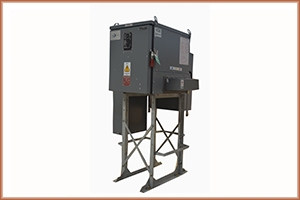
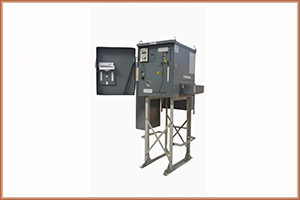
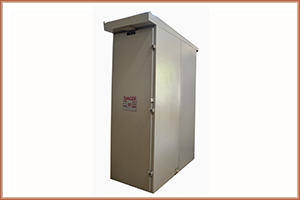
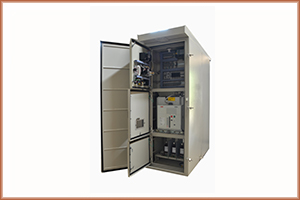
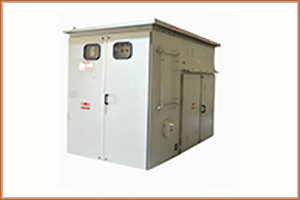
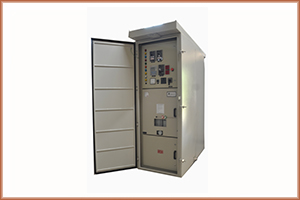
Vacuum Circuit Breaker (VCB in Vadodara, Surat, Vapi & Valsad)
What is VCB?
A Vacuum Circuit Breaker (VCB) is a modern electrical switching device designed to safely control and interrupt the flow of current under both normal operating conditions and electrical faults. It operates using a vacuum as the arc-extinguishing medium, which is housed inside a sealed chamber known as a vacuum interrupter.
When the breaker contacts separate, an arc is generated between them. In a vacuum environment, this arc is rapidly extinguished due to the medium’s exceptionally high dielectric strength and quick recovery properties. This ensures fast and efficient interruption of current, minimizing damage to equipment and enhancing overall system safety.
One of the key advantages of VCB technology is its compact and lightweight design, along with low maintenance requirements. Since the vacuum interrupter is a sealed unit, it prevents contamination and reduces wear and tear, resulting in a longer operational life and consistent performance.
Vacuum Circuit Breakers are widely used in medium voltage applications, typically up to 36 kV. They play a critical role in protecting and controlling electrical systems across various sectors, including industrial plants, commercial facilities, power generation units, and electrical distribution networks. Their reliability, efficiency, and durability make them a preferred choice for modern power systems.
Features of VCB
- Excellent Arc Quenching – Ensures safe and efficient fault interruption
- High Dielectric Strength – Quick recovery after arc extinction
- Compact & Lightweight Design – Saves installation space
- Long Electrical Life – Reduced wear due to minimal arc restrikes
- Low Maintenance – Sealed vacuum interrupter requires minimal servicing
- Environment Friendly – No oil or SF6 gas usage
- Fast Operation – Quick opening and closing mechanism
- Reliable Performance – Ideal for continuous industrial operations
Components of Vacuum Circuit Breaker
- Vacuum Interrupter (VI) – Core arc extinguishing unit
- Operating Mechanism – Spring or motor-operated system for switching
- Current Carrying Conductors – Connects breaker to circuit
- Support Structure & Insulators – Mechanical and electrical support
- Metal Enclosure – Provides safety and protection
Technical Specifications
| Parameter |
Details |
| Voltage Range |
Up to 36 kV |
| Frequency |
50/60 Hz |
| Rated Current |
Up to 2500 A |
| Breaking Capacity |
Up to 40 kA |
| Operating Mechanism |
Spring / Motor Operated |
| Insulation Medium |
Vacuum |
| Mechanical Life |
10,000+ operations |
Components of Vacuum Circut Breaker (VCB in Vadodara)
Operating Mechanism : Provides the force and motion to close and open the contacts (e.g., spring-charged, solenoid operated).
Current Carrying Conductors : Connect the VI to the incoming and outgoing lines or busbars.
Support Structures & Insulators: Provide mechanical support and electrical insulation.
Enclosure : Often housed in a metal enclosure, sometimes with an arc shield.
Advantages of VCB in Surat
Excellent Arc Quenching: Very efficient interruption of fault currents.
High Dielectric Strength: Vacuum provides a very strong insulating medium, allowing for quick recovery after arc extinction.
Compact Size & Lightweight: Generally smaller and lighter than equivalent air or oil circuit breakers.
Longer Electrical Life: Fewer restrikes during interruption mean longer operational life before replacement is needed.
Minimal Maintenance: The sealed vacuum interrupter requires virtually no maintenance over its lifespan.
Environmentally Friendly: No oil (fire risk) or SF6 gas (greenhouse gas) to leak.
Fast Operation: Can achieve rapid opening and closing times.
Suitable for High Voltage: Effectively used in medium (up to ~36 kV) and high voltage applications.
Applications of Vacuum Circuit Breaker (VCB in Vapi, Valsad) :
- Medium Voltage (MV) switchgear (up to about 36 kV).
- Industrial plants and factories.
- Commercial buildings with large power demands.
- Power generation plants (e.g., generator circuit breakers in some designs).
- Renewable energy installations.
- Traction systems (railways).
- Distribution substations.